An open letter to Jeffrey D. Armstrong, president of Cal Poly San Luis Obispo:

Dear President Armstrong,

My name is Jacob Samia, a Cal Poly student at San Luis Obispo. In recent years, major talk over the skateboard policy on the Cal Poly campus has polarized views on campus. In my hometown of Los Angeles, skateboarding is used as an active form of transportation. Because of this, I am writing you in regard to this continued rule enforced on campus. Since you are the President of California Polytechnic University at San Luis Obispo, your stance on skateboarding throughout campus is highly crucial, and I encourage you to reconsider the establishment of this rule, allowing students to have access to skateboarding through certain areas of campus. 

Among the majority of arguments around the ban of skateboard use on campus, the most credible is campus safety. Although this argument is valid, there is flaw in the basis of this argument. The average Cal Poly student is about 20, and according to UPMC sports medicine, the majority of skateboarding related injuries occur in kids under 15. Because of this, there is a misconception present within the reasoning of banning skateboard use on our campus, as most skateboarding related injuries are not occurring in young adults, but children. 

Another argument in favor of lifting this ban on skateboards is around these misconceptions too. Originally, the intention of this ban was not only safety, but also around the damage skateboarders were causing to campus. Although these $20,000 damages hurt campus well-being, the use of skateboards and their need on campus has shifted in recent years, with the majority of students who use skateboards skateboarding for transportation. This is due to the construction of a world class, multi-million-dollar skate park within minutes of campus. This assures public that our campus would not be used as a skate park like the past, and instead in the same way as bicycles and other transportation devices following the rule of campus.

Along with the benefit skateboarding would have on students in terms of transportation, there are also mental and physical benefits to skateboarding. Like biking around campus, skateboarding is a legitimate form of exercise, as MH magazine mentions skateboarding as a form of physical stress relief. 

There are many economic and environmental benefits to skateboarding around campus. That is, skateboarding is an economical alternative to spending money on gas, while saving it. Not only does this provide a cheaper form of transportation, but also contributes to consuming less gasoline. Moreover, students would be able to make a contribution to the environment, all while saving money on parking and burning destructive gasoline.

As you are the president of this prestigious university, and I am a student, we both share a common goal. That is, the best college campus experience possible. Like me, the majority of students would benefit from skateboards being permitted on campus, all while promoting a more environmentally stable and economical campus lifestyle. Yes, skateboarding was once thought of as hazardous to campus, but in recent turn and new developments around the skateboarding community, it’s perception has shifted, and the rules and regulations around campus should facilitate this shift. Please consider skateboards on campus, as they truly would provide a more positive campus lifestyle, conducive to the needs of the students.

Sincerely, 

Jacob Samia
Shahamed Razza Samia: A hard worker

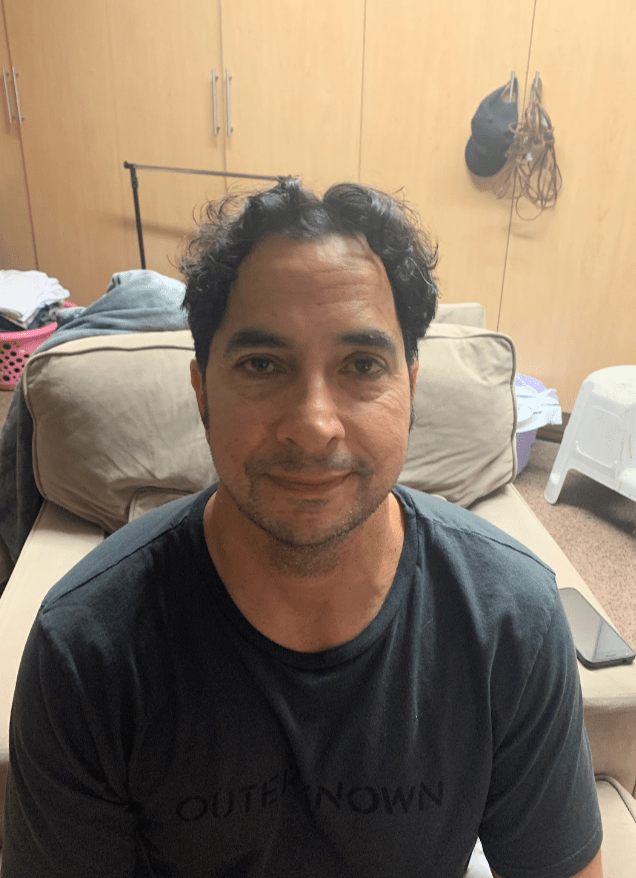
What sparks the drive for some to do well? How can this drive change the course of life for people? Simply put, drive is inspired through character. That is, drive is risen in those who want to achieve a goal. Such drive and dedication to hard work is encompassed in the life of Shahamed Razza Samia. This man, my father, is dedicated to his success. He has drive to do better for himself and his family, all while battling cancer. My father comes from a poor family that was always moving. Because of this he grew to appreciate the values of life and learned to understand that it is essential to work toward his goals. Such hard work and ability to conquer issues is motivating, for I look to emulate the hard work and respect for work my father has, along with the incredible strength to face issues he contains.

Among the different traits that I envy, my father’s dedication to work is beyond exceptional. He approaches life with a structure, taking care of work before considering leisure or fun. Because of this structure, he has had great success. This drive to work hard is highlighted when I interviewed him, seen when I ask him “How do you manage fun and work?” going on to answer “Honestly, I don’t. When I need to get my work done, I do it. Fun time happens, but after I handle the tasks I give myself”. This is evident in his actions. This ability to deny pleasure and handle responsibility is truly inspiring, as it drives me to emulate this approach to success.

Along with the dedication to work my father has, another key attribute in which I envy is his strength and support he gives unconditionally. My father truly encompasses a strong man and what it means to be supportive. He is generous with his support, constantly working to make me happy. This trait is admirable, for he wants his presence to be felt. This is seen when he speaks on family, stating “I do all of this for my family. Son, work is not fun, but makes you happy. It makes you feel fulfilled, and that you deserve what you have. My family is the result of my work”. Such sheer support is present from my father, which I long to follow, for he truly supports his family and strives to preserve the happiness in those surrounding him.

The support my father gives those around him is impressive, but his pure selflessness is undeniably present in his character as well. He does not ever think of himself first. Constantly, my father worries about those around him and their well-being before his own. This trait is rare, as most humans are selfish. Because of this rarity, selflessness is an attribute I intend to develop, as it demonstrates character and depth. For example, my father’s selflessness is captured when he states again, “I do all of this for my family”. He demonstrates how his work is for others, not his own pleasure. This selflessness is inspiring. It shows the true passion and joy my father has in sparking happiness in others. Not only is this selflessness essential for character, but also for communication. That is, selflessness is important in conversation, as it allows the listener to make more of a connection, leading to more focus. This selflessness is a major part of my dad’s character which I strive toward. It is powerful and inspires others to act accordingly. My father inspiries me every day to care for others because of his success.

Among the various qualities my Dad demonstrates, his power to fight through hardship is unquestionably his strongest quality. I do not have this skill, which I envy deeply. In June of 2017, my father was diagnosed with stage III colon cancer. Conquering this problem was difficult, but accomplishable to him. He simply said it was the same way he conquered his other hardships through life. He was poor growing up, and had the same will to fight toward success, as he states “I knew I needed to go to college to make something of myself. I was poor growing up. Because of that, I needed to make my life more successful than my siblings.” In this same way, he too conquered cancer. Through his hard work and dedication to changing lifestyle habits, diet, and stress, he made slow progress. This slow progress eventually turned into success, as he eventually found himself out of the chairs taking chemotherapy into monthly health check ups to make sure it was not coming back. This struggle was hard for him, and pushed him beyond imaginable points. This ability to push through the darkest of times is vital and essential in conquering these problems. I envy this ability and strive everyday to emulate his strength in everyday life. Making a living from nothing and battling cancer, my father demonstrates the attributes of a human I long to emulate.

From the dedication to work my father has to the ability to conquer his own problems, my father is my hero. He inspires me everyday to do better for myself, as I constantly compare my issues to his growing up. My father revealed the factors that drove him to be successful, making a better life for himself while supporting a family, all while being the most selfless and caring man he can be. For the majority of my life, I did not truly know why my dad inspired me, but just knew that he did. I did not believe his true selflessness and other qualities would inspire me the way they did, illuminating the path towards the man I want to emulate and someday become.

About me, Jacob

We were late. Very late. My mom rushed out the door, annoyed with me. My dad was late to take a shower for work. My sister was thrown off of her school morning routine. My entire family including the dog was thrown off, disoriented by the stress-filled morning. They ran around like headless chickens, flocking from place to place within the living space. Such stress and havoc was a daily ritual for me. When people speak about OCD and their problems with obsession, they do not normally speak about the truly impactful drawbacks this disorder has.

 In fifth grade, my OCD problem grew, crippling me in every which way. When I walked to school, I had to take 3 steps in each square of concrete. My left sock had to go higher up on my leg than my right. My sink faucet had to be at a 45 degree angle. I needed to tie my right shoe, THEN my left. Never the other way around. I had a routine for every little aspect of my life. At first, these routine rituals I performed throughout the day were simply annoying, but not truly crippling. As my fifth grade year progressed, my Obsessive-compulsive disorder began to worsen. I began to feel shut out and alone, like nobody could understand why I “needed” to live life with such structure to each of my tasks. This took a toll on me both mentally and physically. It was exhausting, like I needed to do these things in a certain way, knowing they were pointless.

In school one day, Ms. Sharp, my fifth grade teacher, noticed my struggle. She saw that I had been writing my essays about 5 times each. Any assignment I turned in was erased about five times, then re-written 5 more times. The most troubling part of this entire experience was that I knew the stupidity of rewriting things or having a precise bathroom routine, only I physically could not stop. This is when I met Kevin. I do not know his last name, but Kevin is the therapist I began to go see. Through my struggles, he would somehow aid in providing relief from these voices in my head. He had me compile a list of my most stressful routines, and forced me to perform them the “wrong” way. At first, such was impossible, but with time, those routines that I HAD to accomplish began to have less importance. I got familiar with the “wrong way,” and grew to accept it. His voice was in my ear, telling me to leave the right faucet out, not the left. I could hear his voice saying to take 4 steps on the sidewalk panels, not 3. OCD could not beat me. I was not going to let routines that I “have” to perform define me.

Design a site like this with WordPress.com
Get started